Urban Meadow and The Columbia St. Waterfront History
A Garden Rooted in History
Urban Meadow BKLYN sits on land shaped by more than two centuries of change along Brooklyn’s working waterfront. What is now a peaceful meadow of grasses and wildflowers was once part of a dense industrial and immigrant neighborhood tied closely to New York Harbor.
This garden exists because of the neighborhood’s history — of industry, immigration, disruption, and renewal.
From Waterfront Industry to Neighborhood Streets
In the early 1800s, Brooklyn’s western shoreline was largely undeveloped. As New York Harbor grew into one of the busiest ports in the world, docks and warehouses were built along the waterfront between what are now Columbia Street and Van Brunt Street.
Ships from around the world unloaded cargo nearby:
- Coffee and sugar
- Manufactured goods
- Food imports
- Building materials
Dockworkers and longshoremen settled in the neighborhood within walking distance of the piers. By the late 19th century, the Columbia Street Waterfront District had become a busy working-class neighborhood tied directly to maritime trade.
The streets surrounding what is now Urban Meadow were filled with:
- Small houses and tenements
- Corner shops
- Social clubs
- Churches and schools
Life revolved around the waterfront.
The Italian Neighborhood
Beginning in the 1880s, large numbers of Italian immigrants settled in the area. The neighborhood became one of the largest Italian communities in the United States.
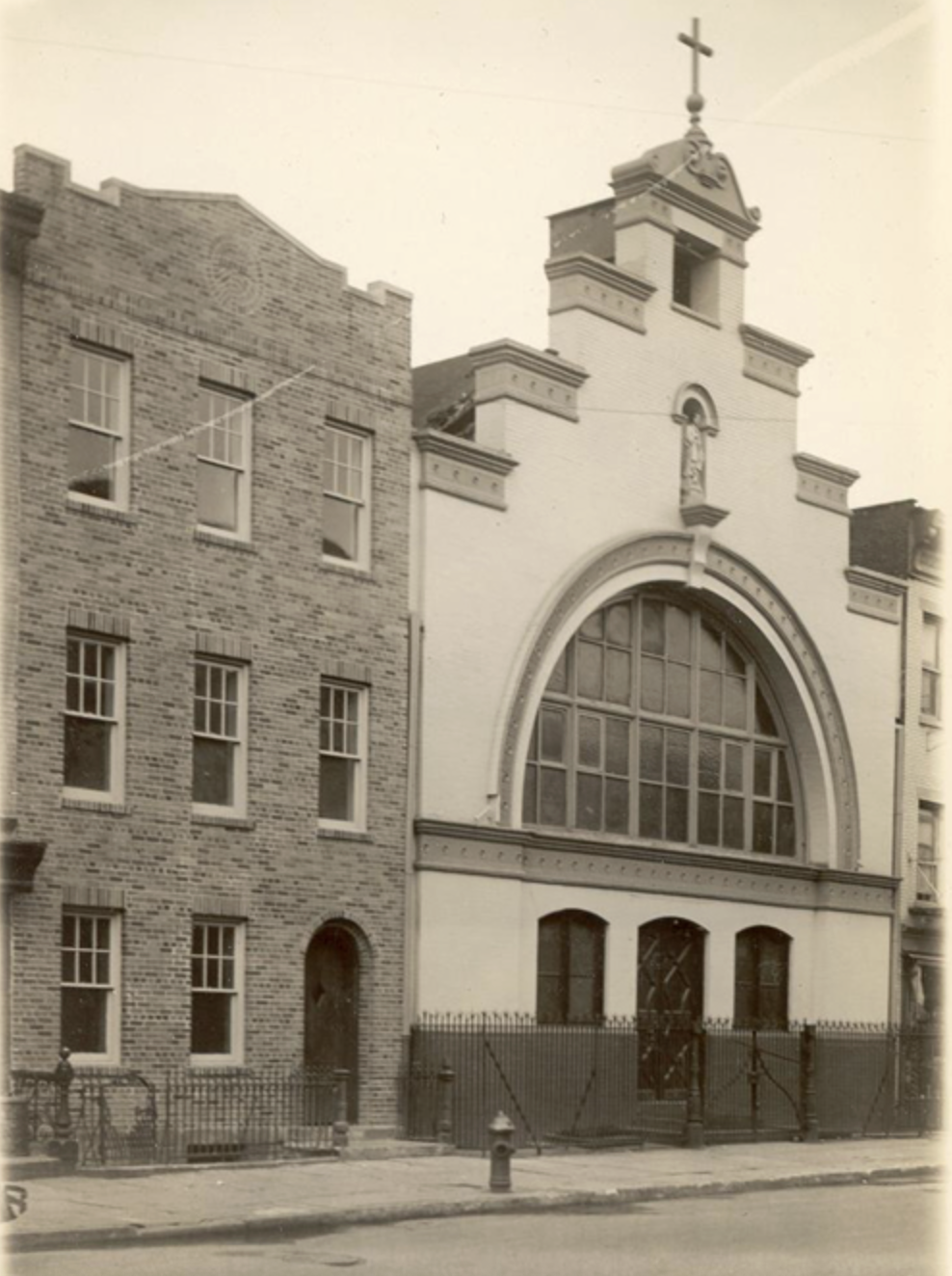
In 1882, the first Italian parish in Brooklyn was founded: the Church of the Sacred Hearts of Jesus and Mary.
The parish became the heart of the neighborhood.
The church first met at St. Peter’s Church at Warren and Hicks Streets before moving closer to the Italian community on President Street near Van Brunt Street in 1885.
In 1892, Frances Xavier Cabrini established a school at the parish to educate Italian immigrant children.
By 1900, thousands of Italian families lived in the surrounding blocks.
Many residents worked on the docks or in nearby warehouses. Families lived in crowded apartments but formed a close-knit community centered on church life and neighborhood traditions.
Religious festivals and processions filled the streets.
The neighborhood around today’s Urban Meadow was once part of this lively immigrant district.
A Neighborhood Divided
In the mid-20th century, the construction of the Brooklyn–Queens Expressway permanently changed the neighborhood.
Blocks of homes and buildings were demolished to make way for the highway.
On December 7, 1941, parishioners gathered for a final Mass at Sacred Hearts Church before the building was demolished. After the service, residents carried statues of saints through the streets in a final procession to a new church.
The expressway separated the waterfront from inland Brooklyn and accelerated the decline of the neighborhood.
At the same time, shipping technology was changing. Containerization reduced the need for dockworkers, and many waterfront jobs disappeared.
Families moved away to other parts of Brooklyn, Long Island, New Jersey, and Staten Island.
Vacant lots began to appear where homes and businesses once stood.
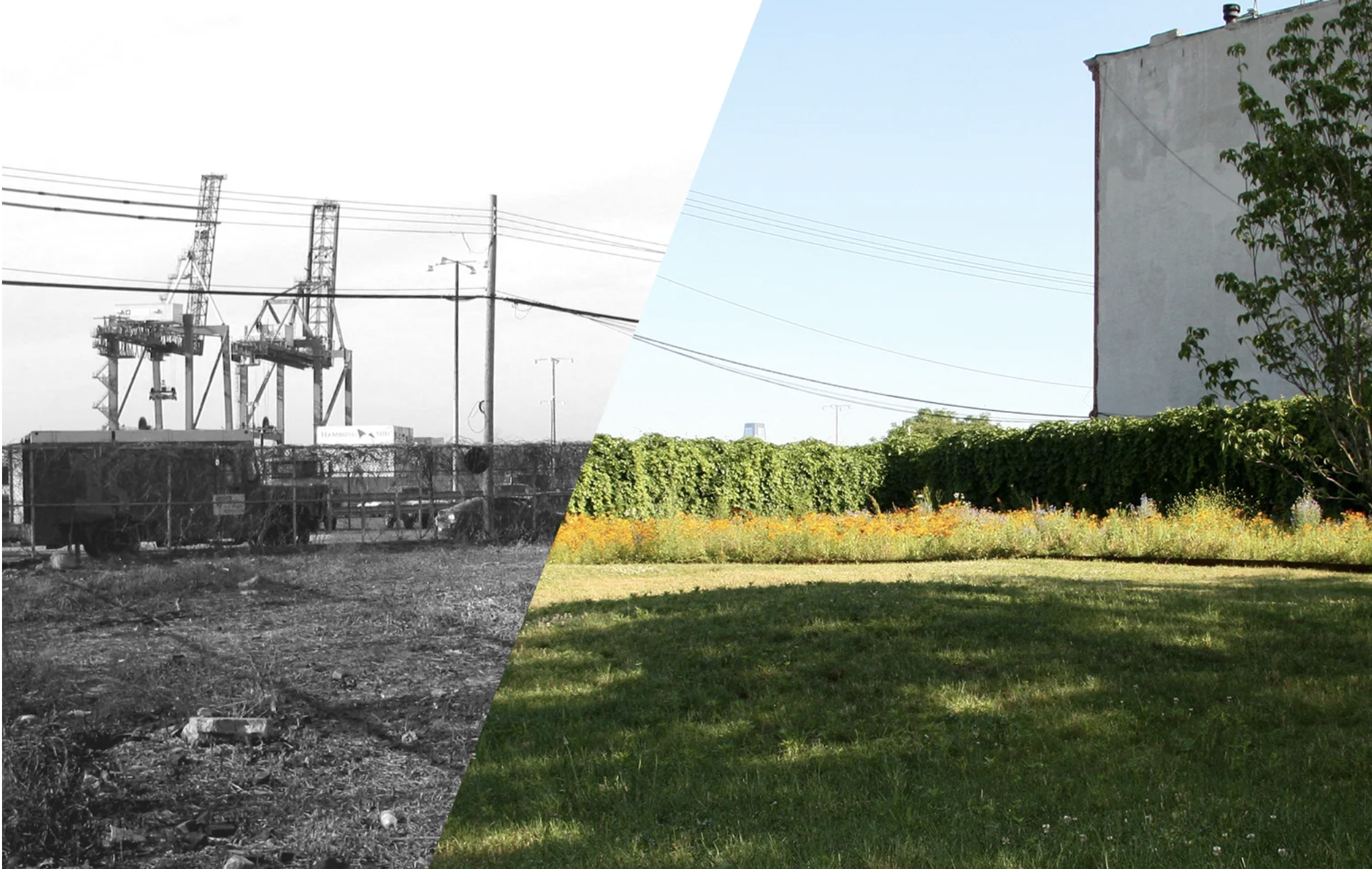
The site of Urban Meadow was one of these empty spaces – land left behind by decades of change.
From Vacant Lot to Living Landscape
By the late twentieth century, the lot that would become Urban Meadow sat unused under the ownership of the New York City Department of Parks and Recreation.
Like many vacant spaces in the Columbia Street Waterfront District, it reflected the neighborhood’s industrial past and population decline.
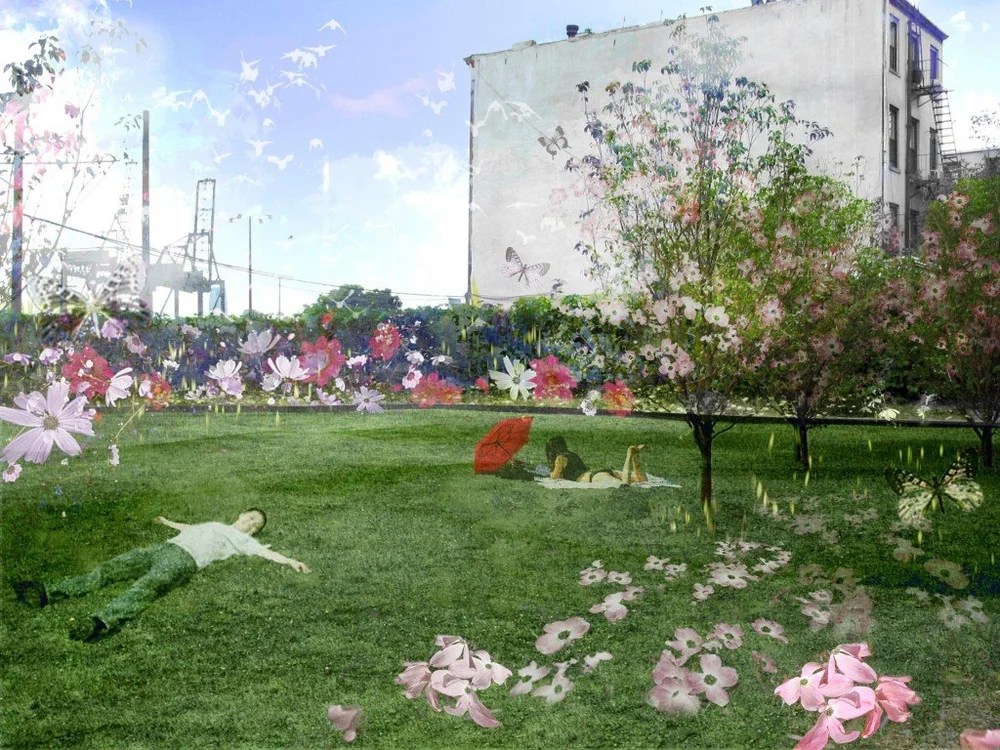
In 2003, landscape design firms Balmori Associates and XS Space proposed a new idea: transforming the unused lot into a temporary urban meadow.
Instead of building structures, the designers planted:
- Native grasses
- Wildflowers
- Flowering trees
- Rolling hills of vegetation
The goal was to demonstrate how even small urban spaces could improve the environment.
Scientists from Columbia University’s Center for Climate Studies studied the site and found measurable environmental benefits:
- Increased stormwater absorption
- Reduced surface heat
- Improved air quality
- Carbon capture through plant growth
What began as a temporary installation quickly became something more.
Local residents embraced the space and began caring for the garden.
Because of strong community support, the Parks Department incorporated the site into its GreenThumb community garden program, ensuring its long-term preservation.
Urban Meadow became a permanent part of the neighborhood.
A Garden for the Future

Urban Meadow BKLYN represents the next chapter in the history of the Columbia Street Waterfront District.
Where ships once unloaded cargo and families once lived in crowded apartments, grasses now grow and trees provide shade.
The garden reflects the resilience of the neighborhood – its ability to adapt and renew itself over time.
From industrial waterfront to immigrant community, from highway construction to environmental restoration, Urban Meadow stands as a reminder that even small pieces of land can tell a large story.
This meadow exists because of the people who lived here before and the residents who continue to care for it today.
 Urban Meadow Community Garden